How to Maximize Engagement in Senior Center Performances
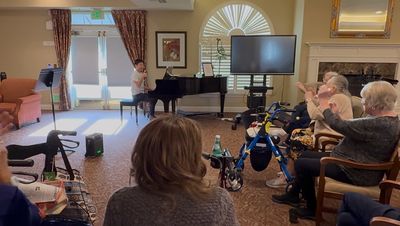
At a senior center, designing performances using psychological strategies allows for optimized mental engagement and perceived duration. When structured effectively, a one-hour performance can feel as engaging as two. This makes psychological considerations essential, as they maximize the value of these limited opportunities.
The perception of time varies across different ages. One way to approximate this is with the equation f(x)=1/x, suggesting that a single year represents 100% of the life at age 1, but only 2% at age 50. This helps explain why experiences like summer vacations feel shorter now compared to when you were in elementary school.
In Robert Lemlich’s study, this effect is refined by using the model f(x)=root of 1/x, indicating a significant amount of all our life experiences accumulate very early, in fact, we experience around half by age 20. These formulas, however, are only rough mathematical approximate and are not exact representations.
The underlying biological concept often associated is the Storage Size Model, which proposes that when we age, our brain stores less movel information due to slower metabolism and cognitive processing.
One effective way to achieve the psychological effects is by increasing audience engagement. Conceptually, the mind has a pulse generator and a cognitive processor. When engagement is high, the cognitive processor is occupied, so fewer pulses are registered, making time pass quicker. Since the cognitive processor is being taxed, it is important to divide the performance into clear segments. These breaks allow the brain time to consolidate the performance and start fresh in the new segment, effectively making the experience feel richer and more expansive, similar to experiences in earlier life. Another complementary strategy is to incorporate nostalgic music, which triggers vivid autobiographical memories. By reconnecting listeners with meaningful experiences, the performance feels more emotionally dense and fulfilling within the same timeframe.
When a performance is designed effectively, time seems to pass quickly. However, this does not mean that the program should be extended. Our brains can only retain a limited amount of information, so it tends to prioritize the most memorable to store, rather than actual duration. Simply adding more pieces, particularly of similar style, does little or nothing to improve the experience. Infact, it can does the opposite by triggering the satiation effect, where repeated exposure leads to diminishing interest. This is why our favorite food may feel less delicious the more we eat it.
To avoid this, we need to be a selevtive and focus on contrast and quality. A performance should have a strong, distinctive final piece in a different style, ensuring a vivid last impression. This aligns with the Peak-End rule, which suggests that people may judge an experience largely based on the most intense moment and the ending. In everyday life, this may be why ending an activity with a small reward may significantly enhanse how it is remembered. Rather than preparing many similar pieces, investing in one high-quality conclusion is both more time-efficient and effective.
In summary, audience satisfaction depends on far more than the quantity. It hinges on how effectively the program engages the minds, which encourages richer encoding of experiences, even in the presence of natural neural decay. By increasing perceived duration through engagement and leveraging psychological principles, such as strong, memorable endings, the overall satisfaction of the performance can be enhansed significantly.